
for BATHING and BASKING – a story by Richard Mirabella
Plus an author interview


Dear friends,
Today in the newsletter, ahead of our September 1 publication date, we’re sharing a story by Richard Mirabella that appears in Thirty Cabins. Richard chose to write about a cabin called for BATHING and BASKING.
We hope you enjoy the story as much as we do. Stay tuned afterwards for a short interview with Richard, and don’t forget to preorder your copy of the zine.
for BATHING and BASKING
by Richard Mirabella
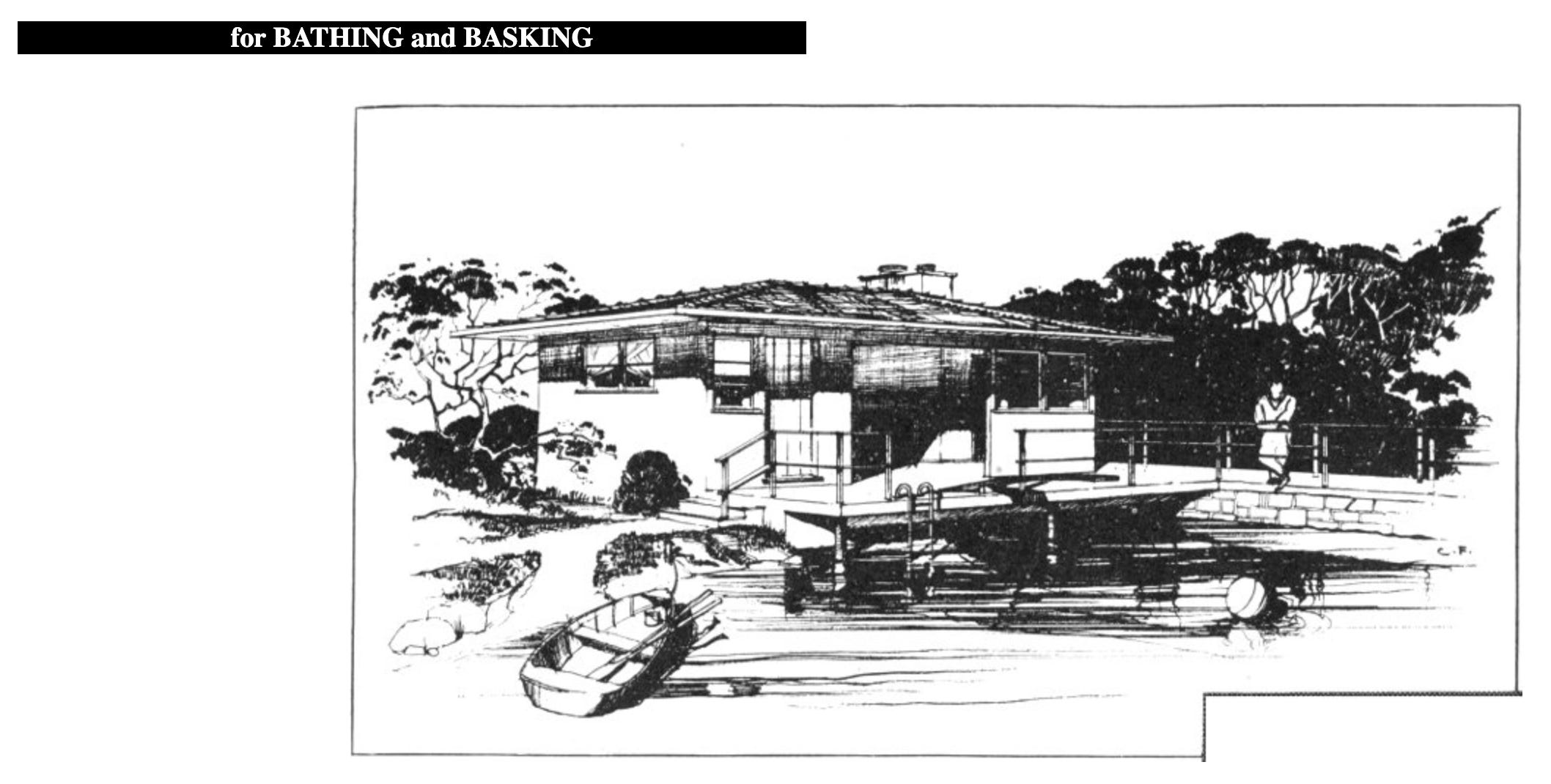
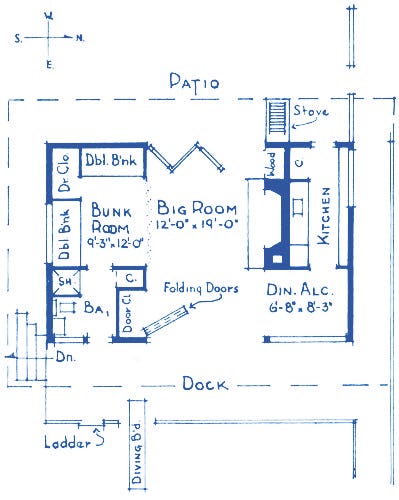
Two old men went to their cabin by the lake. They had been old men for a long time, but the cabin had been built when they were young and was designed for an aquatic life. Go out onto the deck in the morning, roll into the lake, heave yourself out and onto the deck again to bake in the sun in the afternoon, turn golden, develop skin cancer, submit to a surgeon and oncologist, recover, assign your husband the job of frosting you in SPF 100, which sticks unpleasantly in your body hair. The two old men possessed between them: scars of the flesh (the cancer), a fused spine, partial dentures, mesh for inguinal hernia correction, implants in the brain, implants in the heart, implants in the spine, and one penile implant (deactivated). Since the cabin had been built, the world had changed, but not terribly, unless a person began to think of all the hardware in their bodies keeping them alive, all the animals which were extinct, and the political eras one had lived through. The men were 127 and 123-years-old respectively.
When the car dropped them off, they first slowly made their way to the deck, before entering the cabin itself to start bringing it to life, to open the windows and let it breathe. They lounged in the lounges and the lake was somehow unchanged. Always. It had been gouged into the earth by a glacier. One old man said this every time they came to the lake, and the other old man had stopped saying “you say that every year,” because now he liked to be reminded of eternity. This water is so fucking old, 127 said. You’re so fucking old, the other said, and he struggled out of the lounge to remove his clothes, which took him a long time. 127 watched his love reveal his body, which was the most familiar image, the most memorized landscape in his life. The flesh wanted to release itself from the bone, as if 123 had already died. It hung off him like a baggy jumpsuit.
The sun, always reliable, felt amazing. He had forgiven it for making him sick all those years ago.
I’m gonna push you in and kill you, 127 said.
Wouldn’t that be something? 123 said.
All these years, you never knew I was a murderer.
127 tried to take off his clothes, but he had trouble raising his arms on his own so 123 helped him.
Then, together, they slipped into the water, where it was easier to be mobile. 100 years ago, they would have had sex on the deck before, but their desires had redirected toward the sensuality of water and sun. They held their breath and ducked under. They could only swim together now. Close to shore, it wasn’t far down to the bottom, that soft place piled with debris, with the rotten, the new, the old. Who knows what the bottom of a lake is made of. They swam or sank to the lake floor and touched the years. ◆
An Interview with Richard Mirabella
Thirty Cabins: Your characters are 127 and 123 years old, and have frequented the cabin for the larger part of their shared lives. The features in your story—the glacier lake, the sun’s warmth, the cabin, the old men’s bodies preserved through surgeries and mechanical implements—lead to a sense of eternality. What inspired this scale of time? Will the couple be here forever?
Richard Mirabella: I didn’t know what this story was about until I realized the men were very old, not just old. They were impossibly old. Yet, their lives are nothing compared to the life of the planet, the life of the lake they’ve vacationed on the edge of for decades. I think the cabin had something to do with this development in the story. We build these brittle structures, and they last as long as they last; they hold so many memories and experiences. For the men in the story, the cabin on the lake is the setting of the good times they enjoyed. One day the cabin will be dust. I like a small story that zooms out and becomes about the bigness of everything. The couple is ending their time together at their cabin, I think.
TC: What drew you to the for BATHING and BASKING cabin? What attracted the couple to building a cabin?
RM: I love a lake setting. There’s something dramatic about water. So much can happen. I didn’t have an idea, but I knew something would come if I took the cabin by the lake.
The men seem kind of energetic and good-natured, don’t they? I’m not the type to build a cabin, but these guys are. In their twenties, they were fit and fun; they built that thing themselves and had parties. They sunbathed naked.
TC: Is there a meaningful place that you’ve returned to throughout your life? Has it transformed through the years or remained more fixed in time?
RM: I wonder if fixed places like the cabin are actually that common outside of fiction. I’ll just speak about my own life, which has had these distinct chapters, which I left behind. My family left my hometown. We stopped vacationing at the places we went during my childhood summers. I have nowhere I go back to, but I have people, and they are the same and very different from who they once were.